
Cataract Surgery in Central Florida.
Cataract surgery is the most common and successful procedure in the world. The only way to get rid of a cataract is to remove the clouded lens and replace it with an intraocular lens implant (IOL). At the Filutowski Eye Institute, our surgeons create a personalized surgical plan based on your lifestyle and visual goals for the best possible visual outcome.
Covered by Medicare and most medical insurance. Some patients may still have a copay. Our billing team verifies your plan before surgery.
An added cost beyond basic surgery, for premium lenses that can reduce or eliminate your need for glasses. 24-month, interest-free financing is available to qualified patients through CareCredit.
A cataract is the natural lens of your eye turning cloudy with age. Cataract surgery removes that clouded lens and replaces it with a clear artificial one, so your vision is sharp again.
The surgeon makes a tiny opening, gently breaks up and removes the cloudy lens, and sets a permanent intraocular lens (IOL) in its place. You are awake and comfortable under numbing drops. Each eye is done separately, usually a couple of weeks apart.
The lens you choose matters as much as the surgery. A basic lens restores clear distance vision, sometimes with dependency on glasses. Premium lenses can also correct astigmatism and reduce your need for reading glasses, which is why the consultation spends real time on the options below.
Cataracts come on slowly. Most people notice the effects before they notice the cataract.
It may be worth a consultation if you have:
- Blurry, cloudy, or dim vision that glasses no longer fix
- Glare and halos around lights, especially at night
- Colors that look faded or yellowed
- Trouble with nighttime driving
- Prescriptions that keep changing
- Needing brighter light to read
The lens shapes your result.
Light Adjustable Lens
$4,995 per eye + copay
The only FDA-approved lens we can fine-tune after surgery. You test-drive your vision and dial it in with light treatments once your eye has healed.
- Surgeon’s, surgery center & anesthesia fees
- Light Adjustable Lens
- Light adjustment treatments to tune your vision
- 120 days of post-operative care
- YAG laser capsulotomy if needed
- Post-operative medications
- Premium cataract surgery consult
Fixed Multifocal Lens
$3,495 per eye + copay
Our most advanced fixed lens. Clear vision near through far, so many patients read, use a screen, and drive with far less dependence on glasses, even with astigmatism.
- Surgeon’s, surgery center & anesthesia fees
- Multifocal lens
- 120 days of post-operative care
- YAG laser capsulotomy if needed
- Post-operative medications
- Premium cataract surgery consult
- LASIK “touch-up” enhancement if needed
EDOF Lens
$3,495 per eye + copay
Extended Depth of Focus. A single-vision lens that stretches one smooth range from distance to arm’s length, with fewer halos and less night glare than a multifocal. Many patients still use readers for fine print.
- Surgeon’s, surgery center & anesthesia fees
- Extended Depth of Focus (EDOF) lens
- 120 days of post-operative care
- YAG laser capsulotomy if needed
- Post-operative medications
- Premium cataract surgery consult
Fixed Monofocal Lens
$2,745 per eye + copay
Distance vision with a monofocal lens, or blended and monovision, with options to correct astigmatism. Most patients still read with glasses.
- Surgeon’s, surgery center & anesthesia fees
- Enhanced monofocal lens
- 120 days of post-operative care
- YAG laser capsulotomy if needed
- Post-operative medications
- Premium cataract surgery consult
Basic Cataract Surgery
Insurance copay
A monofocal lens for clear distance vision, covered by Medicare and most insurance. Most patients still use reading glasses for close work.
- Surgeon’s, surgery center & anesthesia fees, billed to insurance
- Monofocal lens for clear distance vision
- 90 days of post-operative care
- YAG laser capsulotomy if needed
Basic cataract surgery is covered by Medicare and most insurance plans. Premium lens upgrades are optional and paid out of pocket.
If you choose a standard monofocal lens, your insurance typically covers the procedure. If you choose a premium lens to reduce your need for glasses, you pay the difference for the upgraded lens. A premium package covers more than the lens: it includes a YAG capsulotomy if you need one within a year, four months of post-op care, and a laser vision enhancement if one is needed to reach your goal. That cost depends on the lens, so we quote it at your consultation. Qualified patients can finance premium upgrades at 0% through CareCredit, and HSA or FSA funds can be applied.
The procedure, one eye at a time.
Consultation & measurements
A full exam confirms the cataract and goes over your lens options. We also take detailed measurements of your eye to plan the procedure, which happen at the next visit after your consultation.
The procedure
You are awake and comfortable under numbing drops. The clouded lens is removed and the new implant is set in place.
Recovery
Vision often clears within a day or two. The second eye is typically done a couple of weeks later once the first has settled.
Colors and detail, restored
Cataract surgery replaces the clouded lens with a clear implant. Premium lens options can reduce or eliminate your need for glasses at the same time, available at an additional charge. Most patients see clearly again within a day or two.
Book a consultation
Two Central Florida surgical centers.
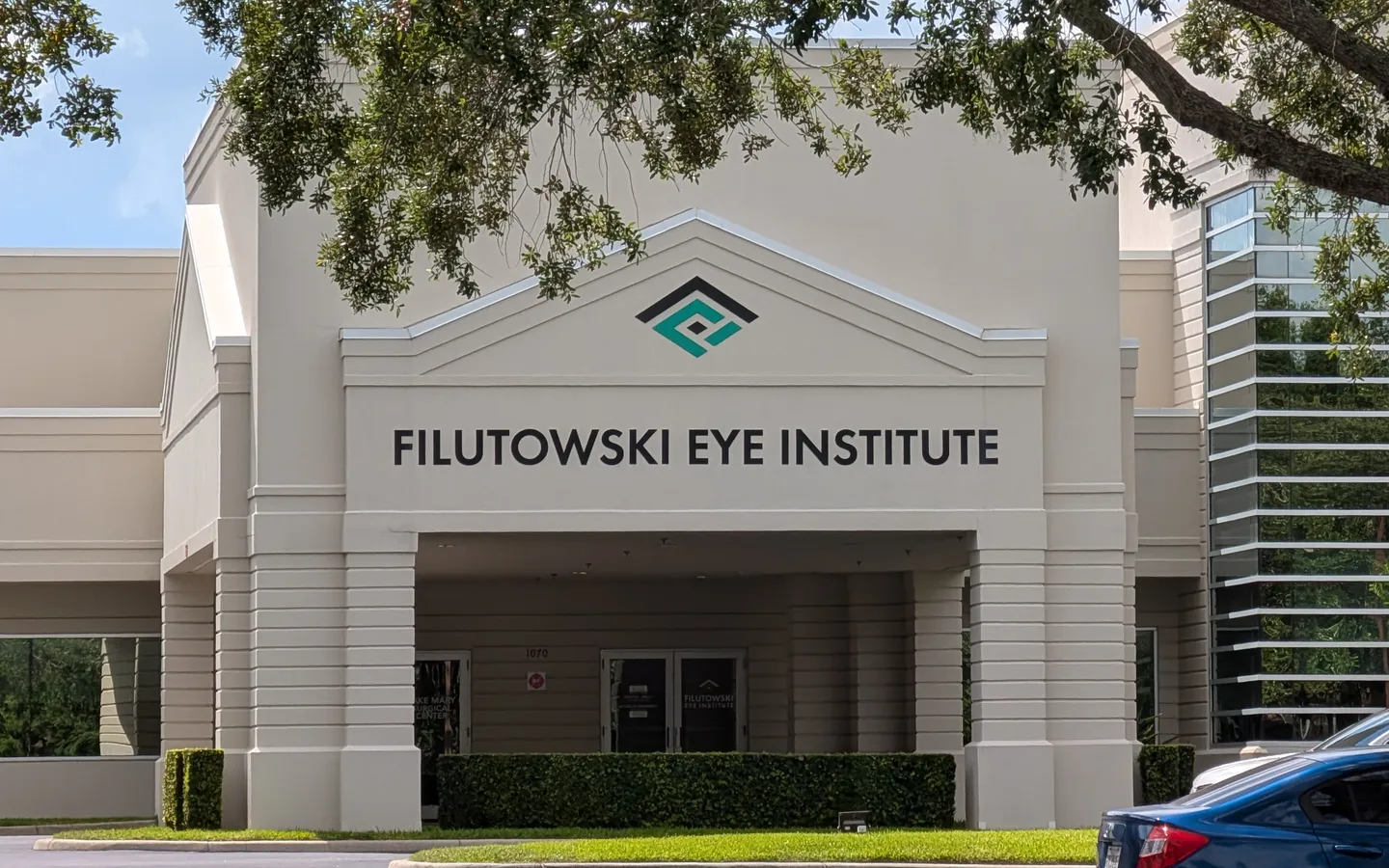
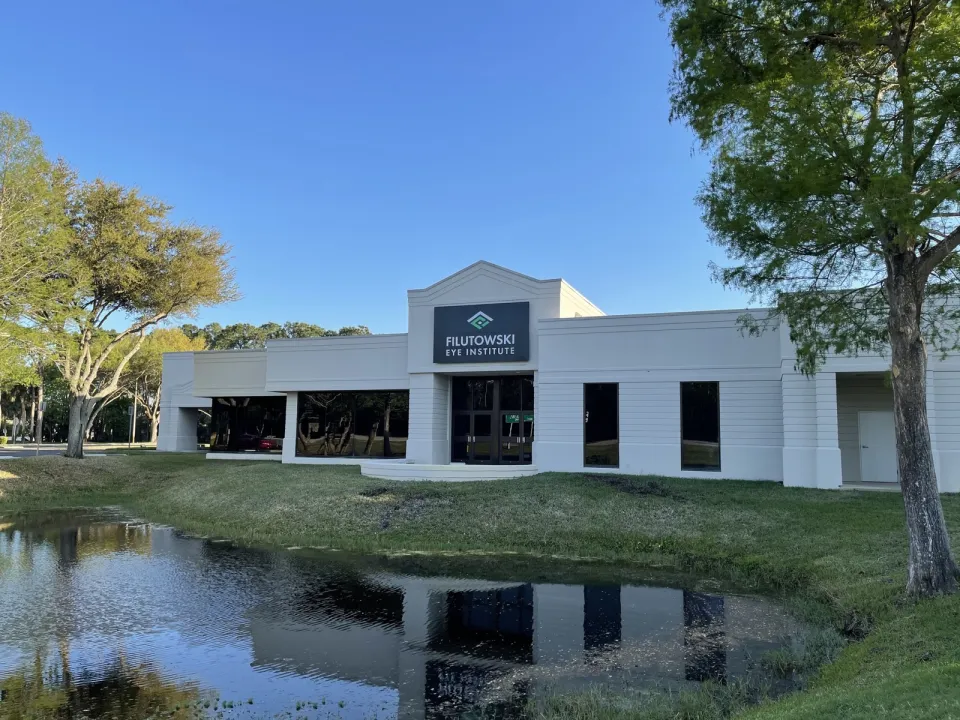
Daytona Beach
Cataract Surgery in Daytona Beach
Consultations and exams for Cataract Surgery are available at all three of our offices, with the procedure performed at Lake Mary or Daytona Beach.
Hear it from our patients
Real cataract patients of Filutowski Eye Institute, in their own words.
Questions, answered.
Is cataract surgery covered by insurance?
Yes. Cataract surgery with a basic monofocal lens is covered by Medicare and most insurance plans. That basic lens gives clear distance vision, with reading glasses for up close. Premium lens upgrades that reduce your need for glasses are optional and paid out of pocket.
Does cataract surgery hurt?
No. The eye is numbed with drops, so the procedure is not painful. Most patients feel only light pressure and are surprised how quick it is.
How long is recovery?
Vision often clears within a day or two. Most people return to normal activity quickly, with vision continuing to sharpen over the following weeks.
Will I still need glasses after surgery?
It depends on your lens. A basic lens usually still leaves you needing glasses. Premium and extended-range lenses are designed to reduce or remove that need across more distances.
What is the Light Adjustable Lens?
It is the only FDA-approved lens your surgeon can fine-tune after surgery. Once your eye heals, you preview and adjust your prescription with light treatments to dial in your vision.
When should I have cataract surgery?
When the cataract affects your daily life, such as driving at night, reading, or working. A consultation confirms the cataract and whether it is time.
Bring your vision back into focus.
Book a consultation to confirm your cataract and review the lens options for your eyes.